
Neuromyths: Separating Fact from Fiction in Education

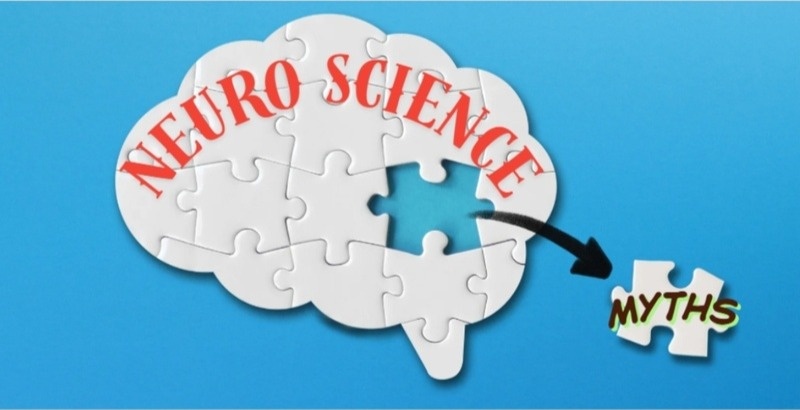
To believe or not to believe, that is the question. We live in a world full of fake news, conspiracy theories, AI-generated pictures, and, of course, our own confirmation biases.
These misconceptions are often referred to as neuromyths, which are widely held beliefs of the brain that are not supported with evidence.
In terms of education, whether you are a parent or an educator, it is essential to ensure the skills, strategies, and information we share with young people are supported by research (neuroeducation). There are many misconceptions about the brain and how we should learn and teach. Misinformation (neuromyths) can lead to misguided teaching practices, which is why grounding our strategies in evidence-based research is key to helping students learn effectively.
The myths listed below represent only a fraction of the widespread neuromyths shaping beliefs in education and beyond.
Neuromyth #1: Right Brain vs Left Brain
Many people still believe the brain’s two hemispheres operate independently or that individuals have a dominant “left” or “right” side. The left brain is often associated with logic and math, while the right is linked to creativity and intuition. While some functions are more localized (e.g., language areas), this does not indicate dominance.
TRUTH: Neuroimaging research shows that both hemispheres are involved in most cognitive processes and communicate continuously, challenging the idea of “left-brain vs. right-brain” learners. In fact, tasks like math require both hemispheres working together, highlighting the brain’s need for constant connection for complex tasks. The human brain does not function in isolation. While brain structure myths persist, beliefs about how students learn may be even more widespread.
Neuromyth #2: Learning Styles
Pigeonholing our learning into a “style” (visual, auditory, or kinesthetic) based on a short questionnaire is not enough or reasonable to determine an individual's preference of learning. However, it is still widely believed by parents and teachers. Many of us grew up in the late 80s and 90s when books and professional development promoted this myth. To change the perception of this myth, we need to be aware of our confirmation bias and seek out evidence-based scientific research.
TRUTH: "A commonly cited use of Learning Styles theory is to use information from self-report questionnaires to assign learners into one or more of a handful of supposed styles(e.g., Visual, Auditory, Converger) and then design teaching materials that match the supposed styles of individual students. A number of reviews, going back to 2004, have concluded that there is currently no empirical evidence that this “matching instruction”improves learning, and it could potentially cause harm" (Newton & Salvi, 2020, p. 1).
Exposing students to a variety of subjects, skills, and clubs will help them engage with multiple senses and various opportunities they may not otherwise have access to, allowing students to develop a broader range of abilities. This aligns well with a strong body of research highlighting multi-sensory instruction, which supports deeper learning and improved outcomes for all types of learners.
Neuromyth #3: We use only 10% of our brain
Guilty. I once believed this myself in university after a professor casually mentioned this in class. But where is the other 90%? Thankfully, research studies have debunked this 100%.
TRUTH: Brain scans such as fMRI and PET scans have shown the movement of blood and cellular activity proving that we are constantly using all regions in our brains, consciously and unconsciously, even in our sleep. In fact, any “unused” brain neurons would not survive. Think of a school building: many of the classrooms are used but not always at the same time, just like our beautiful brains!
Neuromyth #4: Dyslexia is a reading disorder based on vision problems, which causes people to read backwards or mix up their letters. This is a common misconception that has been a struggle to debunk.
TRUTH: The truth is that dyslexia is a brain-based reading disorder with impairments in the brain regions that are connected to sounds, not vision. The reversals and skipping of words are related to linguistic weaknesses rather than visual weaknesses. It's also important to note that dyslexia is not related to intelligence. (Learn more about dyslexia by accessing our 90 minute webinar!)
Neuromyth #5: Children who take ADHD medication are more likely to abuse drugs when they become teenagers. This myth tends to persist due to misinformation around the most commonly used ADHD medication, known as psychostimulants.
TRUTH: Those who are diagnosed with ADHD do have a higher risk of abusing drugs when left untreated, but the correlation of ADHD to drugs is NOT a causation. In fact, proper treatment of those diagnosed with ADHD reduces the risk of drug use.
"The findings of the present study support the conclusion that early initiation of stimulant treatment for ADHD reduces the risk of substance use relative to later onset of treatment, and that the resulting risk is similar to that in the general population" (McCabe, Dickinson, West, and Wilens, 2023, p. 482).
How do we ensure that we are not falling into the trap of neuromyths?
We hear of myths in our society from the Loch Ness monster to those who believe an LD diagnosis means there is no opportunity for post-secondary school. Addressing neuromyths can be best tackled by continual learning and willingness to change and understand through referencing evidence-based research.
Parents and teachers have limited access and time to research studies on neuroscience; thus, it is important that there is a bridge between educators/parents and neuroscience.
We can bridge this gap by:
- Evidence-based Professional Development
- School Psychologists
- Seminars/workshops on neuroscience
- Share reliable resources
Being aware of neuromyths helps us make better decisions for students’ learning. By prioritizing research-based strategies, we empower young people with teaching and experiences that truly reflect how their brains learn best. Learning literally never stops for all of us.
Further Resources
Explore more professional development courses on learning differences and neurodiversity: Foothills Academy PD Courses (email Bani Puri for a discount and mention this article!)
Verywell Mind. (n.d.). Left brain vs. right brain: Understanding hemispheric dominance. https://www.verywellmind.com/left-brain-vs-right-brain-2795005
International Dyslexia Association. (n.d.). Understanding dyslexia: Myth vs. facts. https://improvingliteracy.org/resource/understanding-dyslexia-myth-vs-facts/
Tokuhama-Espinosa, T. (2018). Neuromyths: Debunking false ideas about the brain. W. W. Norton & Company.
*Full list of references available upon request